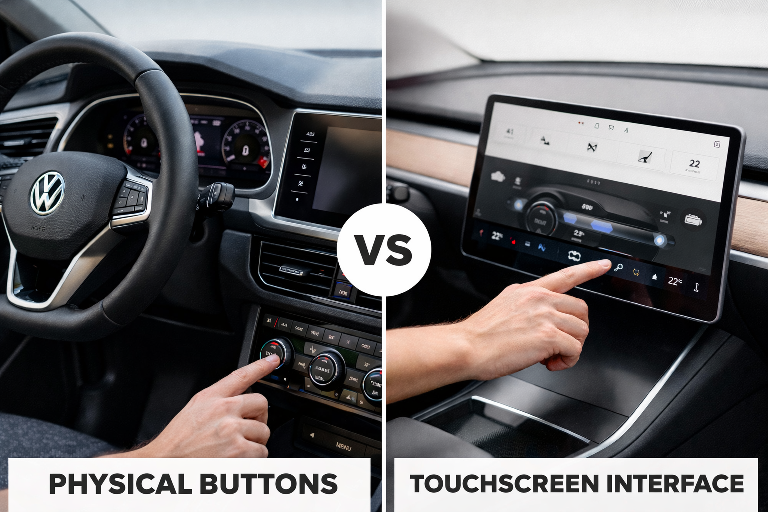

Volkswagen जैसे ब्रांड क्यों वापस ला रहे हैं Physical Buttons?
Electric Vehicles यानी EVs सिर्फ engine technology में ही नहीं, बल्कि interior design trends में भी तेज़ी से evolve हो रही हैं। पिछले कुछ सालों में आपने देखा होगा कि Tesla-style full touchscreen dashboards लगभग हर EV brand का standard बनते जा रहे थे। Climate control से लेकर music, driving modes और यहां तक कि glovebox तक – सब कुछ touch screen के अंदर चला गया।
लेकिन अब 2025–2026 के आसपास EV design trend में एक बड़ा twist दिख रहा है। Volkswagen जैसे established brands openly बोल रहे हैं कि “Pure touchscreen approach was a mistake” और इसलिए वे वापस physical buttons और knobs introduce कर रहे हैं। यह shift सिर्फ nostalgia नहीं है, बल्कि safety, usability और user behavior पर based है।
इस article में हम detail में समझेंगे कि Physical Buttons vs Full Touchscreens in EVs की debate क्यों इतनी important हो गई है, Tesla ने minimalist approach क्यों चुना, Volkswagen जैसे brands ने strategy क्यों बदली, और future EV buyers के लिए कौन-सा design ज्यादा practical साबित होगा।
EVs में Full Touchscreen Trend कैसे शुरू हुआ?
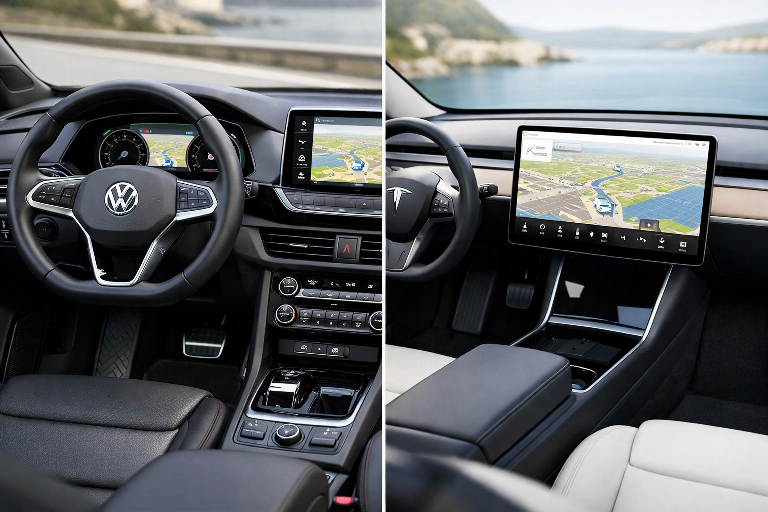
जब Tesla ने Model S और बाद में Model 3 launch किया, तो उनका single large touchscreen dashboard एक revolution बन गया। Buttons हटाना brand identity बन गई – clean look, futuristic feel और software-driven experience।
इसके बाद almost हर EV manufacturer ने यही रास्ता अपनाया:
Minimal dashboard, fewer buttons, ज्यादा functions screen में shift। यह trend खासकर EV interior design, digital cockpit, और software-defined vehicles जैसे keywords के साथ popular हुआ।
लेकिन practical use में एक problem सामने आई। Driving के दौरान AC temperature change करना, fan speed adjust करना या seat heating on करना – यह सब touchscreen में buried menus के अंदर चला गया। Driver की eyes road से हटती हैं, जो safety risk बन जाता है।
Physical Buttons क्यों हो रहे हैं EVs में वापसी?
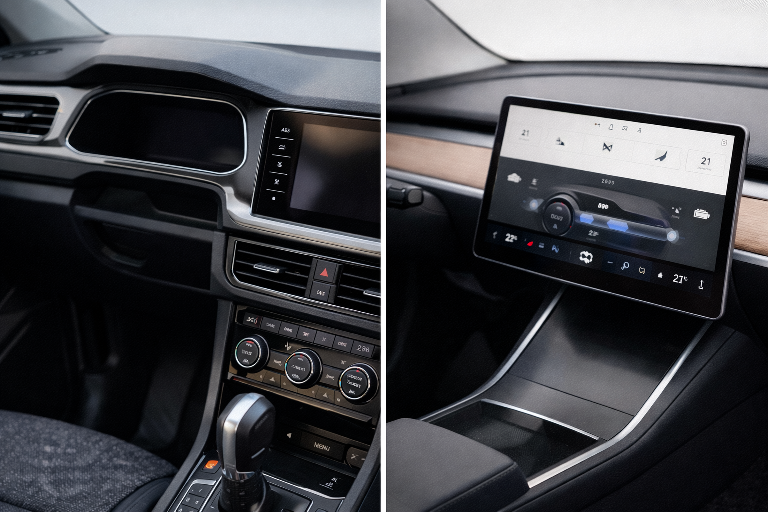
Volkswagen ने openly accept किया कि too much touch control reduced usability। उनके design heads के अनुसार real-world driving में driver को tactile feedback चाहिए – यानी बिना देखे button press करने की habit।
Physical buttons के फायदे सिर्फ comfort तक limited नहीं हैं, बल्कि:
पहला, Driving Safety। Button press करने के लिए screen देखने की जरूरत नहीं होती। Muscle memory काम करती है, जिससे distraction कम होता है।
दूसरा, Ease of Use। हर user tech-savvy नहीं होता। Elder users या new EV buyers के लिए physical knobs ज्यादा intuitive होते हैं।
तीसरा, Weather & Conditions। Gloves पहनकर touchscreen operate करना मुश्किल होता है, लेकिन buttons हर condition में काम करते हैं।
इसी वजह से Volkswagen future EVs में steering-mounted buttons, climate control knobs और basic functions के लिए dedicated physical controls ला रहा है।
Touchscreen-based EV Interiors के फायदे क्या हैं?
इसका मतलब यह नहीं कि full touchscreen design पूरी तरह bad है। Touchscreen-based EV interiors के अपने strong points हैं।
सबसे बड़ा फायदा है Flexibility और Software Updates। एक ही screen से features update हो सकते हैं, UI change हो सकता है और new functions add किए जा सकते हैं।
दूसरा फायदा Cost Optimization है। Manufacturing में multiple buttons और wiring हटाने से cost कम हो सकती है।
तीसरा, Futuristic Appeal। Young buyers और tech lovers को clean, minimalist design बहुत attractive लगता है। यही reason है कि Tesla buyers touchscreen-centric design पसंद करते हैं।
Hybrid Approach: Buttons + Touchscreen = Best of Both?
अब EV industry जिस direction में जा रही है, वह pure touchscreen या pure buttons नहीं, बल्कि Hybrid EV Interior Design है। इसमें critical functions के लिए physical controls और secondary features के लिए touchscreen।
Volkswagen का vision यही है –Steering controls, volume, climate और defogging जैसे features buttons पर रहेंगे, जबकि navigation, settings और infotainment touchscreen में।
यह approach driver-centric EV design को improve करता है और साथ ही modern feel भी maintain करता है।
Tesla और Volkswagen Design Philosophy में Core Difference
Tesla मानता है कि car future में smartphone की तरह होगी – minimal hardware, maximum software। वहीं Volkswagen जैसे legacy brands real-world driving data और customer feedback को ज्यादा weight दे रहे हैं।
Tesla owners largely early adopters हैं, जबकि Volkswagen mass market को target करता है। Mass market में comfort और familiarity ज्यादा important होती है।
यही philosophical difference है जो Physical Buttons vs Touchscreens debate को और strong बनाता है।
Future EV Buyers के लिए क्या बेहतर रहेगा?
अगर आप EV buyer हैं, तो decision सिर्फ looks पर नहीं होना चाहिए। आपको देखना चाहिए:
- आप daily driving में कितनी बार climate या controls use करते हैं।
- आप touchscreen menus से comfortable हैं या simple buttons prefer करते हैं।
- आप highway driving करते हैं या city traffic में ज्यादा रहते हैं।
Experts मानते हैं कि आने वाले 2–3 सालों में most EVs balanced design adopt करेंगे, जहां usability और technology दोनों साथ चलेंगे।
Final Thoughts
EV design trends clearly बता रहे हैं कि industry अब user experience first approach अपना रही है। Volkswagen जैसे brands का physical buttons वापस लाना कोई backward step नहीं, बल्कि smart correction है।
Future EVs शायद पूरी तरह button-based या पूरी तरह touchscreen-based नहीं होंगी, बल्कि human-friendly hybrid design अपनाएंगी। यही design ultimately EV adoption को mass level तक ले जाएगा।
अगर आप EV trends, electric car interior design और future mobility को closely follow करते हैं, तो यह shift आने वाले समय में बहुत impactful साबित होगा।
Related Posts
Upcoming 7 Seater EV Cars in India Under 20 Lakhs (2025–2027)
2026 में Petrol Car खरीदना – सबसे बड़ी गलती या एक Smart Decision?
Car Insurance Claim में ये 3 बातें Miss की तो पैसा नहीं मिलेगा
Petrol vs EV – 5 साल में कौन आपकी जेब ज्यादा काटेगी? Complete Truth (2026 Guide)